
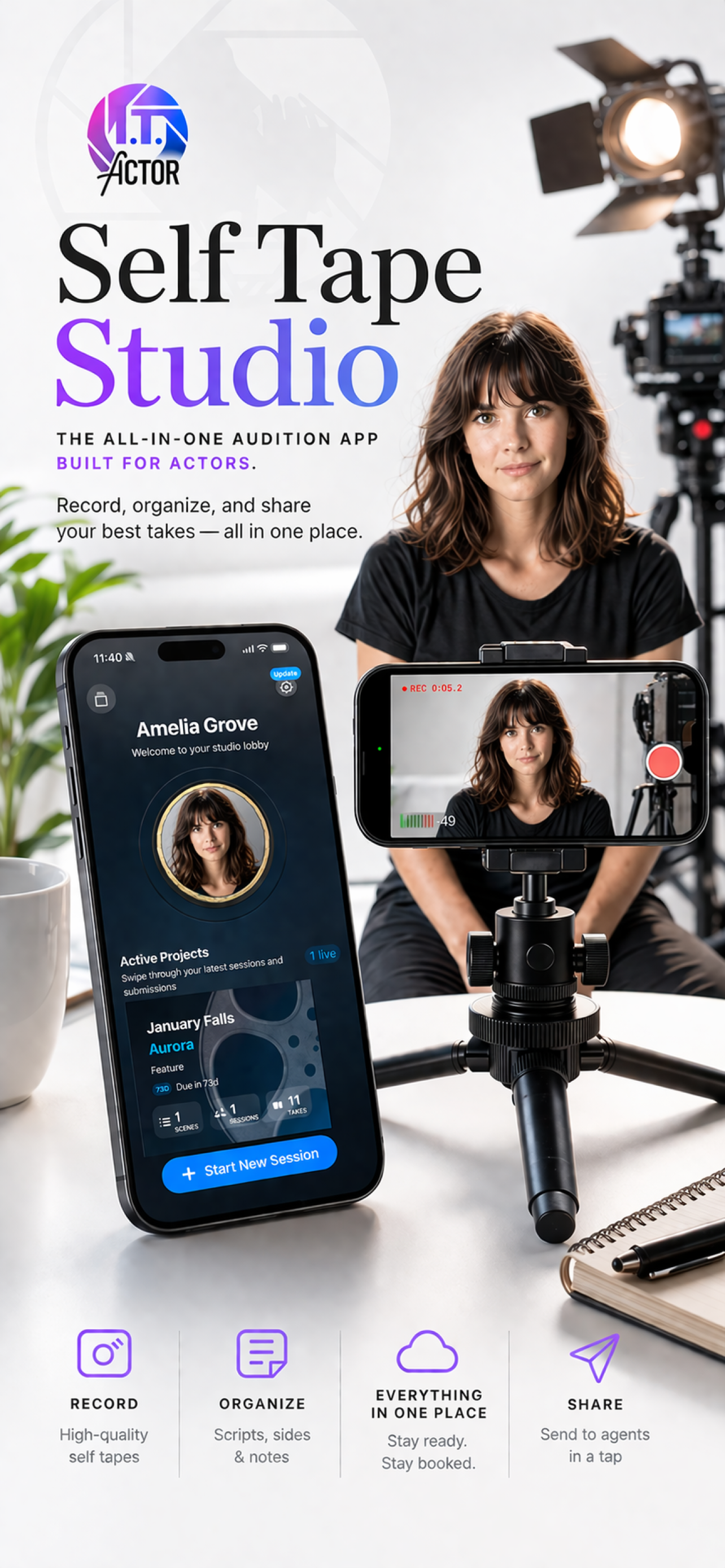
Start with framing that feels intentional.
Casting wants to see performance clearly. That usually means a stable camera, a clean background, and framing that matches the requested shot size. If instructions say close-up, stay disciplined. If they ask for full body, make sure the setup supports it.
Use light to reveal the face, not to stylize the room.
Soft, even light is usually stronger than dramatic contrast. The goal is a clear view of your eyes, expression, and presence. Natural window light or balanced soft light tends to read better than harsh overhead sources.
Treat audio like part of the performance.
Clean sound is one of the fastest ways to make a tape feel professional. Reduce room noise, keep the phone stable, and avoid any setup that makes the reader or the actor sound distant or hollow.
Keep the workflow close to the camera.
Actors lose focus when setup, slates, and delivery live in different tools. A better workflow keeps framing, teleprompter, slates, take review, and exports inside the same environment so the performance stays central.
Review before you send.
Watch the take back once for technical quality and once for performance. The first pass checks framing, sound, and interruptions. The second pass checks whether the take feels lived in and honest.